Showing posts with label Uwe Rosenberg. Show all posts

Sunday, December 24, 2023

My Top 10 Boardgames Published in 2023


Here's a look at my 10 favorite games published in 2023.
(Or else made available in North America so late in 2022 that there was no way to really play them before the calendar flipped.)


#10

ATIWA
First of three (!) Rosenberg games on the list. Much simpler than most of his "big box" games, with a cute theme and adorable bat meeples. You're building a village, tending to families and their environment, all the while trying to grow and maintain the fruit bat community.
Atiwa features a very original turn-to-turn mechanic that morphs the main action into another and—together with other design levers—ensures that each play shows a different aspect of the game's personality.


#9

MIND UP!
Mind Up! is very much in the 6 nimmt! mold—complete with exclamation point—but it takes things one step further without making the rules more difficult to master.
A row of cards is laid out on the table, in ascending order. Players simultaneously select and then reveal a card from their hands, grabbing from the tabled row the card that matches the position of the card they played. So if you want to grab the first card in the row, because its color is worth more points to you, then you need to play a card with a low value; but if someone else plays a lower card, well then you're stuck with the 2nd card in the row...
Not only do the just-played cards become the new row of cards up for grabs on the table (think ahead!), but all the cards you win (and score at the end of the round) form your hand for the next round.
Cleverer and cleverer.


#8

APPLEJACK
Designer Uwe Rosenberg does big & complex and short & sweet equally well, always offering a challenging and rewarding experience. This time around, players are invited to each create their own orchard, making sure they have enough connecting apples of each color when it comes time to score that variety. 
For a game that clocks in at 30 minutes and can be explained in five, the depth of the decision space boggles the mind.
(You can read my flash review here.)


#7

GREAT WESTERN TRAIL: NEW ZEALAND
Herding sheep—instead of cows—in kiwi-land, you hire builders to construct your buildings, shearers to profit from the wool before you ship off the actual livestock, sailors to move your ship around and open new markets, and shepherds to handle the beasts themselves. Throw in a little deck-building and a lot of planning ahead, and you've got another winner.
This third and last incarnation of the GWT engine is an excellent game, but it falls a little short of its two older brethren. Call it less elegant or slightly more convoluted: there's a little something that prevents it from reaching the dizzying heights of the original game or the Argentina incarnation.
(You can read my flash review here.)


#6

SKIES ABOVE BRITAIN
Five years ago (already!?) I reviewed Skies Above the Reich, a brilliant solo wargame about breaking up formations of Allied bombers flying towards Germany with ill intent. And while designer Jeremy White said that he didn't see how he'd adapt the system to cover the Battle of Britain, Gina Willis showed him how and jumped in as co-designer.
This new incarnation of the system turns the tables and sends hordes of German bombers over Britain, which the player must defend at all costs. The rules overhead is slightly heavier but well worth the additional investment, for a game that's every bit as thrilling as its predecessors. (Yes, there were two!)


#5

HEGEMONY
I've been burned by enough Kickstarter projects to learn to disregard any kind of hype surrounding a new game being peddled on that platform. Most of the time I'm right; once in a while I'm wrong.
Hegemony proved to fall in the latter category.
It's an ambitious design, pitting asymmetrical roles against each other: the Worker Class, the Middle Class, the Capitalist Class, and the State. Everyone plays by their own rules but must come together to make it all work, and the game truly shines. I don't own a copy myself, something I'll remedy as soon as the 2nd edition comes out.


#4

ORANIENBURGER KANAL
Third and final Rosenberg game on the list; I'm frankly surprised something like this hasn't happened before. Now this might be his driest looking game ever, what with its generic cards and sterile grid of a game board, but I think it might also be one of his best. It's strictly a two-player game, with each opponent attempting to outbuild the other while optimizing the paths, roads, canals and railways that connect everything together. 
The game borrows the clever resource wheel from Ora et Labora and offers a real brain burner, with surprisingly few rules and a play time (90 minutes) that's more than fair for a game of this depth.


#3

PLANTAGENET
The Levy & Campaign series of games has long fascinated me, but there were always a few irritants that prevented me from truly loving what was on the menu. Plantagenet, the fourth L&C title, fixed them all.
Levy troops, raise money, gather food—then go to war! Of course, it won't hurt if you manage to convince a handful of lords and vassals to join your cause, and gain control of critical towns and cities.
(You can read my review here.)


#2

SKY TEAM
How many cooperative games do you know that play in 15 minutes, offer meaningful decisions, feature a generous helping of scenarios in varying levels of difficulty, come with fantastic components, and prove to be a nail-biter to the very end?
Just land the plane. Everything's going to be fine...
(You can read my flash review here.)


#1

MR. PRESIDENT
The most complex and longest game on the list, Mr. President puts you in the White House right after inauguration. Can you deal with everything your cabinet, your country, and indeed the world can throw at you?
I'm amazed at the scope of the package, at the stories it tells, at the palpable tension it generates from beginning to end. Yes it takes at least 10 hours to finish, and yes it's a solo game (which means you're sitting alone in your corner for those 10+ hours), but if you enjoy the sort of engine roaring under this particular hood, you're in for a ride like no other.
(You can read my review here.)

* * *

DISAPPOINTMENTS
I define disappointments as games I expected a lot from, and which failed to deliver.
Here are the "top" three from 2023.


I'm a big fan of Mike Fitzgerald's other rummy games, namely Jack the Ripper and Wyatt Earp. So this one sounded like a great new variation with a fun theme.
Turns out the game's tortured mechanics barely manage to avoid the "broken" label, and the whole thing's a sad and sorry bust. I played one game and knew this was going on the trade pile. Fast.


This case was a bit different: I felt no real desire to play Ark Nova, but the hype surrounding it was so over the top that I just had to see what everyone was talking about. 
And sure, it's a fine game, but it's not doing anything all that different from what I can get out of Terraforming Mars, for instance. I understand if you like the theme better, but people treated this like the Second Coming, which I thought it was not.


This is another case of "best game ever" that I had to investigate. And once again, it's a fine game with good-looking components, but it's another tableau builder that falls flat for me. I found myself missing the feeling of shared construction I enjoy in—yes, that one again—Terraforming Mars.
Hey, maybe I'm just not a tableau builder enthusiast? Wingspan also left me pretty meh.
* * *

STRAGGLERS
Let's end on a high note with three games that would have made the list had I encountered them back in the year when they were published.


A solo WWII tactical war game with a bunch of scenarios, tons of units, and an automated opponent that—while pretty random—generates fun situations and gives the human player a run for their money. Why didn't I play this sooner?
Granted, my being late to the party meant that I could benefit from the revamped maps of the 2nd edition, and spare my retinae some graphics-induced searing.


Merlin feels the way great Eurogames did back when they were simple and efficient. While I love complex games, there's something satisfying in a well designed system that's straight to the point and super fun. 
A classic Feld that's a blast with just the basic game, and which becomes a tasty feast when you start mixing in some of the expansion modules.


I really enjoy trick-taking games with a twist, and Diamonds delivers in spades. You earn diamonds in four different ways that correspond to the suits of each trick you win, but you also trigger the suit ability of a card you play when it doesn't match the current trick!
It's a great example of what designer Mike Fitzgerald can do when he's not busy destroying his rummy legacy.


# # #

Wednesday, November 15, 2023

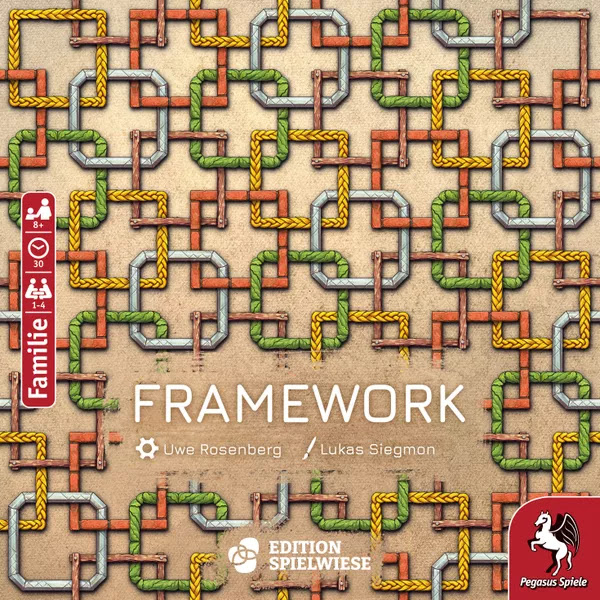
Flash Review — Framework


Players: 1-4
Works well with just 2: Yes!
Solo quality: a bit boring
Age: 8+
Playtime: 30 min
Complexity: 3/10

Just like Applejack, this is one of Uwe Rosenberg’s simple-yet-clever designs, albeit under a more abstract guise: you’re just building a series of interlocking tasks that you try to complete.

The game is played with a huge variety of tiles that players organize in rows and columns, with no predefined grid to adhere to. When it’s your turn, you pick one tile from a limited selection on offer and add it to your structure, making sure the new tile orthogonally touches at least one other tile. Then you check if you’ve completed some of your tasks, and put one of your wooden markers on each of them that’s done.

Some tiles will display one or more tasks, in the form of a number on a colored background; other tiles will show one or more colored frames (used to complete the aforementioned tasks); and a third category of tiles will sport both bits of information.

Which would you pick?

To complete a task, you need the required number of frames in the requested color, arrayed in a continuous chain where at least one link in the chain is in direct contact with the task at hand.
In the example below, the 5-yellow task is done (I should put a wooden marker on it), but the 3-gray task is still missing one gray frame
—and the 4-brown/orange task has nothing going for it. Yet.


Some tiles are self-fulfilling (like a 5-green task that also shows a green frame), which makes them easier to pull off and kind of a no-brainer. Where things get twisted (and interesting!) is when you have to deal with, say, a 7-brown task surrounded by a yellow frame: Do you place that tile next to your group of brown frames, or would it be more effective to forsake the 7-brown task and instead use the yellow frame to complete a bunch of yellow tasks elsewhere?

The first player who completes 22 tasks (i.e. runs out of wooden markers) wins the game. And if you’re anything like me, you’ll just want to play it again, and again. It’s amazing how much gameplay Rosenberg can pack in a 30-minute game with two and a half rules to learn, with something addictive thrown in for good measure. So don’t be fazed by the apparent simplicity of Framework: it’s dead easy to learn, yet damn fun to play.

The solo game is, as with most of Rosenberg’s designs, a beat-your-own-score type of puzzle. So the first time you play it, you don’t win nor do you lose: you just set your own benchmark
then you try to do better. Not my kind of solo experience, but it’s over in five minutes and it’s not an unpleasant exercise.

Most easily forgotten rule: In this case it’s not a rule you’re likely to forget, but rather a completed task you’re just not seeing. Keep your eyes peeled!


# # #

Tuesday, September 12, 2023

Flash Review — Applejack


Players1-4
Works well with just 2: Absolutely!
Solo quality: Okay
Age: 8+
Playtime: 30-60 min
Complexity: 4/10


Another Uwe Rosenberg game about farming? You bet.
This time we're running an orchard and harvesting apples, using honey as currency.

The game's timer is a die that steps its way around the central board. On your turn, you pick an apple tile from one of the stacks on either side of the die, and add it to your own orchard. Then the die takes one step forward, and it's your neighbor's turn.

Right after the start of the 2nd circuit

If the die passes an apple icon, each player scores that particular apple variety: add up all of your apples of that color displayed on tiles that touch each other in your orchard, and subtract the number on the die (which starts at 1): that's how much honey you earn. There are seven different apple varieties, so pay attention!
When the die has done a complete circuit on the central board, it rotates from 1 to 2 and starts moving again—but this time your apple groups need to be larger to score. After a second complete circuit, the die rotates from 2 to 3, and the game ends halfway through the third and last circuit.
Perform some final scoring shenanigans, and the player with the highest score wins.

My personal orchard, about halfway through a game

If you're familiar with Rosenberg's work, the scope of Applejack can be compared to that of Patchwork. While they don't play the same way at all, both games offer a surprisingly deep decision space, despite shipping with very simple rules and a short playtime. And they're fun!

I've found the game works best with two players: the solo goal is fixed (score 65 points with no one to give you trouble), while multiplayer outings tend to overstay their welcome (60 minutes for a game of Appeljack would test my patience).

Most easily forgotten rule: Flowers do not need to touch when scoring. Just count the number of flowers in your orchard, no matter where they are.


# # #

Thursday, January 20, 2022

A Year of Boardgaming, 2021 Edition


For me, 2021 ended on December 19, when I suffered a sports-related accident that resulted in a myriad of bumps and bruises, plus a serious concussion. (As of this writing I still haven't recovered; in fact, writing this—over several short sessions spanning a handful of daysis a doctor-ordered exercise aimed at retraining my brain vis-à-vis computer screens.)
The rest of the year was a literal blur.

This not only impacted my entire plans for the holidays (farewell home-improvement projects) but also the rest of my winter activities (adieu ski season), not to mention getting back to work.
Boardgaming was also thrown out the window. (A week after the accident, I attempted a game of Comancheria—a medium-complexity affair which I'd played before—and couldn't manage it at all. I had to wait almost another week before my mind could stomach a re-read of the rules.) As as result, some of my self-imposed challenges and late-December gaming days (entire days, I'm telling you) were lost in the wake of the ambulance that carried me, unconscious, to my friendly neighborhood hospital.
And writing about boardgames as the year was coming to a close? Forget it.

So here we are, almost done with the first month of the new year, and me droning on about what I played during 2021. Reminder: I'm just counting physical boardgames, and none of my digital plays.

Mainly because of the ongoing pandemic, but also a bit due to my accident, 2021 turned out to be my worst boardgaming effort since 2006.


GAMES
I played 87 different titles (down from 101 in 2020, an ominous trend), for a total of 356 plays (down from 384—when I used to routinely hit way more than 500 plays in a single year!). I spent 399 hours poring over mapboards in 2020, versus 450 hours in 2020: another sinking metric. Still, that's a bit over 16 full days devoted to boardgaming bliss. Could have been worse, I guess.
Out of those 87 titles, 49 were new to me (up from 42 in 2020—I suppose I felt a bit more adventurous). 

Here are the 10 games I played the most in 2021:
1. Wing Leader (28 plays)
        Second year in a row where Wing Leader earns the top spot in this recap; this WWII air combat game just won't let go of me. And since one of my wargaming buddies and I are replaying the entire war using the game's scenarios, I'm far from done with it. (Our aircraft are just starting to get radios installed...)
        A card-based cooperative game of absolute horror and creeping insanity, with artwork that will both amaze you and keep you up at night.
3. GIPF (20 plays)
        I hadn't played this classic abstract in many moons, and it felt great to get back into it. The GF and I intend to (re)work our way through the entire series.
4. Friday (16 plays)
        Really clever and challenging (and fast!) solo game, from a designer I usually don't favor.
5. Pandemic Legacy, Season 0 (15 plays)
        By far the least enjoyable of the series. We finished the campaign, but we were glad to be rid of it.
6. Can't Stop (13 plays)
        My youngest daughter discovered this thrilling push-your-luck dice game, hence its resurgence.
7. Black Sonata (12 plays)
        I can't say enough good things about this solo, hidden-movement game. Genius is no hyperbole here.
8. MicroMacro: Crime City (11 plays)
        I never thought I'd enjoy this simple, visual crime detection game, but it ended up in third place on my list of Top 10 games of 2021. Pure fun.
9. Combat Commander: Europe (9 plays)
        Only NINE plays of my favorite game in 2021? What a travesty.
10. Hallertau (9 plays)
        My favorite game of 2021, and one of Uwe Rosenberg's best. About farming, it goes without saying.

PEOPLE
During 2021, I explored the boardgaming worldmainly from my homealongside 13 different players, down from 36 in 2020 (and 55 the year before). This is catastrophic.

Still, here are the 10 people with whom I played the most last year:
1. Suzie D. (132 plays)
2. Jean-Luc S. (66 plays)
3. François P. (49 plays)
4. Ophélie K. L. (21 plays)
5. William L. (13 plays)
6. Gustavo A. (6 plays)
7. Daniel S. (3 plays)
8. Doris L. (3 plays—my mom, for crying out loud)
9. Héloïse K. L. (2 plays)
10. Diego R. (2 plays) 

To give you an idea, a typical year would have me play about 15 games with the person in 10th place... The situation is starting to feel pretty bleak.
But the GF is hanging on to the top spot, and for the fifth consecutive year. (Which of course makes sense during a pandemic, considering we live under the same roof.) And three of the kids are on the list this year—only Béatrice is missing! 

LOCATIONS
The number of different places where I played boardgames tumbled from 17 in 2019, to 12 in 2020, to only eight in 2021. And that included FaceTime as an alternate home location (with mirror boards duplicating the moves of remote opponents), as well as my frikkin' car—during a particularly long traffic jam due to a harrowing crash on the freeway.
Yes, I always have some kind of game on me.

69% of my gaming was done at home, 20% over FaceTime, and then some games here and there at friends' places when the lull in the pandemic made that somewhat safe. 
Quite a shit year. And I'm not holding out much hope for 2022.

RANDOM OBSERVATIONS
I broke my decade-long streak for my yearly H-index: it went down by 1, to 9. 
(In this context, my H-index is the number (h) of games which I've played a number (h) of times.)

I narrowly failed to accomplish my 10x10 challenge in 2021 (play 10 games 10 times each): I was only missing one play of Combat Commander and one play of Hallertau, both of which would have been stupid easy to pull off were it not for that concussion thingy. So that challenge stays at 10x10 for 2022.
I did clear my other two challenges: 50 solo plays, and 75 wargame plays. This means the 2022 editions are going up to 55 solo plays and 80 wargame plays, respectively.

My favorite game, Combat Commander, currently stands at 454 plays. By now it feels like I've been saying "almost 500 plays!" for years, and I hope that changes soon. I seriously doubt I'll crack that mythical number by year's end, despite my ongoing project to replay the entire second world war through Combat Commander scenarios. One more reason to look forward to the stormy pandemic skies finally clearing up, so I can sit down with my usual opponents on a regular basis.

I launched 2021 with a play of the heavy Clinic, and closed it out with the very light Wits & Wagers (fighting through the concussion-induced fog and confusion). Hey, at least I was able to play *something*.


So what am I looking forward to in the coming year?
I was pretty enthusiastic last time around, anxious to play the new Kanban (brilliant design), Aliens: Another Glorious Day in the Corps! (a steaming turd of a game and my biggest disappointment of the year), Bonfire (an instant classic), Caesar: Rome vs Gaul (enjoyed my single play of this, but need to play more), Imperial Struggle (same!), Dominant Species: Marine (fine but ultimately not for me), plus Stellar Horizons (sadly unplayed, and I don't even have the concussion to blame for that).

In 2022, I'm awaiting delivery of three Kickstarter games: Weather Machine (from the always brilliant Lacerda), Free At Last (Civil Rights movement in the 1960s), and Dutch Resistance (solo Netherlands underground during WWII). Also on the docket, the much delayed 303 Squadron (Polish fighters during the Battle of Britain), Horseless Carriage by Splotter, Alexander Pfister's Boonlake, and Messina 1347 (now that the excellent Praga has put Vladimir Suchy on my radar).
Rounding out the wishlist, a bountiful harvest from GMT Games: Into the Woods (finally gonna try that ACW system, just because this covers the battle of Shiloh), Charioteer (one more racing game!), Mr. President ('cause I'm lucky to have a table that's big enough for that monster) and Red Dust Rebellion (Sci-Fi COIN game set on Mars? I'm in...).

I'll also be spending considerable time further playtesting a prototype of mine; more on that later.

Happy gaming!


# # #

Wednesday, January 12, 2022

My Top 10 Boardgames Published in 2021


Here's a look at my 10 favorite games published in 2021.
(Or else made available in North America so late in 2020 that there was no way to really play them before the calendar flipped.)


#10


THE CREW: MISSION DEEP SEA (designed by Thomas Sing, published by Kosmos)
Last year, I included the original The Crew in my Top 10 as well. It was an unheard-of cooperative trick-taking game and a damn brilliant design. The new incarnation is just as brilliant, but less of a revelation than its predecessor.
This time around, player are exploring the ocean depths—another pasted-on theme. No matter: the new tasks players must accomplish on each of the 50 missions are even more varied and exciting than in the previous volume. 


#9


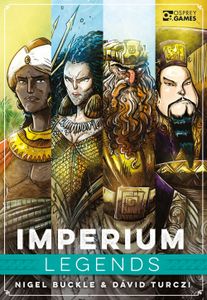
IMPERIUM: CLASSICS/LEGENDS (designed by Nigel Buckle & David Turczi, published by Osprey Games)
Imperium is one of the games on this list that prove that deck-building games still have legs, and that their core mechanism hasn't been fully mined yet.
Each civilization begins with its own starting deck, nation deck and development deck, which create a completely fresh "civ building" experience from game to game. Not only do different civs function differently (some of them wildly so, like the Arthurians), but repeat games with the same civ will unfold along new paths and at different speeds, thanks to the luck of the draw.
The stand-alone sister games function as an expansion for each other, and offer a menu of 16 different civilations to pit against one another. Bonus points for fitting materials from both games into a single box once you ditch the ill-conceived insert.
(You can read my flash review here.)


#8


UNFATHOMABLE (designed by Tony Fanchi, published by Fantasy Flight)
A reskin of Battlestar Galactica set in the monster-infested world of H.P. Lovecraft.
To be fair, this is more than a reskin: Fanchi took everything that rubbed me the wrong way in the original hidden-traitor game and sanded it down to a smooth finish. More theme & dread, more characters, and—perhaps most of all—freedom from a licensed franchise all make for a better game that will be allowed to grow organically.
(You can read my flash review here.)


#7


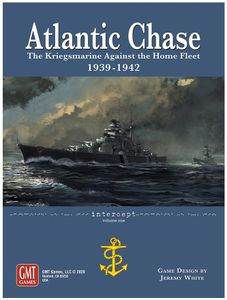
ATLANTIC CHASE (designed by Jeremy White, published by GMT Games)
Solo wargames are not a rarity by any stretch. But when Jerry White gives you one, you know you're holding something special. (The game can also accommodate two players, by the way.)
Not only does Atlantic Chase feature some of the most inventive game mechanics I've encountered in the entire year, but it also makes learning over 100 pages of rules like it's nothing. Seriously. So if you're intrigued by a WWII naval game that makes you wonder where exactly your ships are along their trajectory (and forget about the enemy's...), jump right in. The water's just fine.
(You can read my full review here.)


#6


BONFIRE (designed by Stefan Feld, published by H@ll Games and Pegasus Spiele)
Can't have a year without a Feld design in my Top 10, can we?
It's a strange theme with gnomes and magical bonfires (that need to be lit, of course!), but it's also very clever in how it requires players to generate their own action tokens and then make the most of them.
Point salad? You bet. But maybe one of the tastiest of those salads you'll ever try.
(You can read my flash review here.)


#5


PRAGA CAPUT REGNI (designed by Vladimir Suchy, published by Rio Grande Games)
Praga looks like an old-school action selection game, but the action wheel at the heart of the whole system drives the show like nothing you've seen before. And how many games out there tempt you into building the famous Charles Bridge—with eggs?
(You can read my flash review here.)


#4


LOST RUINS OF ARNAK (designed by Min & Elwen, published by Czech Games Edition)
Another deck builder? Why, yes. With worker placement thrown on top? That's right.
Arnak is not the only game to bridge that mechanism gap this year (Dune: Imperium also did something interesting in that department), but it's the one I keep coming back to. It's like an adventure movie I can't get enough of.
(You can read my flash review here.)


#3


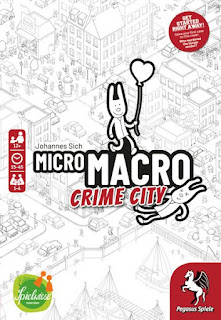
MICROMACRO: CRIME CITY (designed by Johannes Sich, published by Pegasus Spiele)
For a while I gave up on boardgaming's most prestigious award, Germany's very own Spiel des Jahres: over the years, the jury has gone from praising complex games (that kind I like!) to rewarding simple family games I rarely play anymore. For some reason, in 2020 I decided that from now on I would always buy and try the winners of the SdJ, if only for the encyclopedic knowledge—"Yes, I've played it, I know how it works." Oh boy.
MicroMacro: Crime City is nothing short of genius, both in its simplicity and in the pure fun it generates.
(You can read my flash review here.)


#2


COMMANDS & COLORS: SAMURAI BATTLES (designed by Richard Borg, published by GMT Games)
Yes, one more entry in the C&C line of wargames. This time we're fighing in medieval Japan! And the system is an absolute delight, with Dragon cards alongside Command cards, allowing warriors to perform all manners of feats, plus an honor system to frighten the most seasoned combattant. (Make SURE you don't retreat, of there'll be hell to pay.)
And with 40 scenarios included in the base game, this is by far the most generous C&C game yet.


#1


HALLERTAU (designed by Uwe Rosenberg, published by Lookout Games)
Yes, that Rosenberg, of Agricola fame. And yes, another farming game.
This one feels all at once different from the others that came before, and somehow familiar in a "distant relative" kind of way. You're still sowing and harvesting and raising and slaughtering, but both the worker placement and the spending mechanisms are new and intriguing.
It's a beast of a game for sure, but ultimately simpler than the size of the box might suggest. One of my favorite Rosenberg designs, and there have been several.
(You can read flash review here.)


DISAPPOINTMENTS
I define "disappointments" as games I expected a lot from, and which failed to deliver.
And there were quite a few of those in 2021. Here are the "top" three.


Holy crap was this one a bust. I was sort of hoping for an update of the old Aliens: This Time It's War game published back in 1989 by Leading Edge Games, but it turned out to be an absolute disaster. The minis are very nice (but require Warhammer-level assembly labor), and that's about it. Super bland gameplay, boring missions, and a general why-should-I-give-a-shit aftertaste.
Game over indeed.

For some reason I expected to have a blast playing this Richard Garfield design about vampires running around, biting humans and needing to get back to the castle before sunrise. Meh. I mean, the game works and it's kind of entertaining, but there's nothing special here. After a handful of games I feel like leaving it to its eternal rest.
Clank! does this much better, and from the same publisher, to boot.
I'm a huge Martin Wallace fan, but these past few years it seems he's done nothing remarkable—and Rocketmen is sadly no exception.
It's not just an ordinary game: it's an actively bad one. On your turn, you can either throw rocket parts in your stockpile, or launch a mission and see how far you get. That's it.
I scrubbed the game after only one play. This ain't getting anyone to the moon—or anywhere else for that matter.
(I'm glad I only ordered the base game, and none of the deluxe pimped-out components/accessories the publisher is trying to peddle out there.)
Last year, my third disappointement was also a space-themed game. I'm starting to think there might be some kind of low-orbit curse hanging over me...


STRAGGLERS
Let's end on a high note with three games that would have made the list had I encountered them back in the year when they were published.

A 30-minute, Shakespeare-themed solo design with hidden movement mechanics all driven by a genius system of cards—with holes in them!—that absolutely blew my mind. You have to try it to believe it.
(You can read my flash review here.)


Another solo wargame. (Can you say pandemic?) Here, adversaries are drawn from three different cups, depending on the situation. But circumstances will move some pieces from cup to cup, so the dreaded enemies you thought you had all the time in the world to prepare for might show up early after all.
Hey, it's the 9th century, you're Charlemagne, and you have to get a grip on Europe before things boil over. Just get to it.
Last year I listed the first game in the series (Antietam) as a straggler, so this year it's Shiloh's turn. (Maybe I'll get to play the next volume in the series the year it comes out. Maybe.)
Fun game, fair simulation, great American Civil War feel; a little fiddly but frankly not that much, and maybe a little long compared to its sister game. Still a keeper, and one I wish I'd played earlier.
(Yeah, yeah, there was also a magazine game that used the same system, but it turned out to be pretty weak, so I'm happy not to consider it part of the canon. Pun intended.)


# # #