Showing posts with label essay. Show all posts

Wednesday, December 10, 2025

The Play's the Thing


The existence of the most recent edition of Combat Commander made me wake up to two startling realizations.
First, my favorite game in the entire universe is celebrating its 20th anniversary. Already! And second, I’ve never written a proper review of this extraordinary opus.
Sure, I’ve penned a handful of articles about other entries in the series, but I never got around to typing an honest-to-goodness review of the game that started it all.
And I’m not going to do that today, either.

Rather, what I want to write is a love letter to the game I cherish most.

Why is it that, under normal circumstances, there’s a more than fair chance I’d rather play Combat Commander over anything else? What makes the contents of that box so appealing and so addictive? Why, oh why, after close to 600 plays (and we’re talking about a two-hour game, here), do I still anticipate with trepidation my next foray into those cardboard bunkers and hedgerows?
The answer to all of those questions is both simple and delightfully convoluted.

I met Chad Jensen—the man who would later give us Combat Commander—back in 1998, when I’d just set foot in northern California for a two-year stint at Lucasfilm. We lived in neighboring towns and our common passion was boardgames, so we were bound to run into each other before too long. We became friends; how could we not? Strangely enough, I showed him a prototype of mine the following year. (That game was Proteus, eventually published by Steve Jackson Games.) In return, Chad did—  well, nothing. He never showed me one of his designs, never even mentioned he was working on a handful of games. Nothing against me: Chad was just not the kind of guy who would have you taste a half-baked lasagna, even if it might be the best half-baked lasagna in the history of humankind. And so it was that I discovered that well kept secret about my friend along with the rest of the world in 2006, when GMT Games put out the title that would overrun so many others in my collection.

As of this writing, I have played well over 1,700 different games over the years, and I enjoy all kinds, from the purest of abstracts (something like GIPF) to bloated plastic dungeon crawlers (think Nemesis), and everything in between. But wargames hold a special place in my heart, for a wide variety of reasons. I had already played many of them by the time Combat Commander came along, but I had never experienced something quite like it.

So what is Combat Commander? It’s a WWII tactical clash between two players that generally involves a low number of units operating across a constrained area. You move a bunch of units on a hex grid, attempt to take valuable objectives, eliminate threats, sometimes assaulting across lush fields in broad daylight, other times clearing one house after another in a bloody night raid supposed to be worth it all when the sun comes up.

Did you see what happened there? I started with a clinical description of basic game mechanics, but the story quickly took over.
THAT is Combat Commander.

The game tells a story. It also does many other things and does them well, but the story is what stays with you after the last gun was silenced and all the pieces have gone back into the box.

How does it tell that story? An excellent question.
And I believe the answer is to be found in three specific places.

They'll never take that hill... right?

1. ACTION RESTRICTIONS
Games allow players to make decisions in different ways. Some wargames allow each unit to act every turn, installing the player as ultimate master of their domain. Other systems provide a number of action points on each turn, leaving it up to the player to allocate said points amongst selected units, as they see fit; units thus activated can then perform whatever action is deemed necessary, but not all units will act on every turn. In yet other cases, the game will dictate which units can act, but allow the player to decide what actions to perform with them.
With Combat Commander, each player is dealt a hand of cards: those are the orders units can be given on that turn, usually one card to a unit or a handful of units. The order you had in mind doesn’t appear on any of your cards this turn? Tough.
This level of restriction is one of the highest in the wargaming realm, and yet—ironically enough—it’s from those shackles that true creativity can emerge with the most grace.

Picture a game of chess. Before your move, through the roll of a die, knights are rendered inoperable for one turn. Suddenly, the attack you had planned can’t proceed. Will you decide to maintain that attack? If so, how? And if you change your plan, what will it become? Will you opt for a holding pattern until Lady Luck paralyzes a piece of a different nature? Or settle for a retreat, hastily put together to compensate for your neutered forward thrust?
That’s how it goes with Combat Commander. The terrain ahead is ideal, your units are in place, one of the enemies in sight is already broken (making for an even better target)… You draw your hand of cards, and—thanks again to that mercurial Lady—you don’t hold a single Fire card. What do you do? You can skip your turn to throw away your hand of cards and hope you get some ammunition on the redraw, or you can try to make the best of a bad situation. Perhaps there’s a way to use your Rout card to push that wounded enemy soldier some spaces back, which would enable you to play one of your Move cards to get your own units even closer to your goal. Perhaps you decide instead to move a single unit towards a different objective, hoping to draw the enemy’s fire and make your opponent waste a precious Fire card—a card they will no longer hold should you move your men around at a later time. Or you could elect to hold fast and discard just those cards that wouldn’t be of any use against a counterattack that your opponent, faced with your inaction, might decide to launch.

Without anyone noticing, the story is taking form. Instead of being “and then my guys started firing at the opposing squad,” it morphs into a more engaging “my guys wanted to shoot but couldn’t, so instead they had to resort to…”
See how memorable this is shaping up to be?

Some players detest the vagaries of such a system, stating that they prefer more control—fair enough. Combat Commander aficionados, on the other hand, relish those spur-of-the-moment challenges the game throws at us. In a way, we also feel it makes the proceedings a bit more realistic (to the extent that a tabletop game can lay such a claim), in the sense that in the heat of battle, not all of your orders will reach their intended recipients, and then not all orders that do will get executed without a hitch.

2. RANDOM EVENTS
This stands as another apple of discord amongst wargamers: Once in a while, a random event will throw a wrench in the proceedings. You or your opponent might receive unexpected reinforcements; a blaze could start in a building, spread to the nearby woods and cut off your main access point; air support might kill units you believed safe; off-board artillery could create a brand new foxhole for opposing units to exploit—the list goes on. While a category of players cannot stand this state of affairs, I (and many others) absolutely love it. Yes, I’ve been robbed of an inescapable victory—and been saved from certain defeat—more than once by those random events, and they’re still one of the main draws of Combat Commander for me. There’s something thrilling in the knowledge that the game will throw you a curveball, something you couldn’t possibly prepare for, and force you to deal with it. 

Again, this contributes to the story the game is writing. The lone team bleeding out in those northern woods and that everyone assumed was done for? Turns out a hero emerged, patched them up and led them out of those woods to fight another day.
You might not have planned for this, but now you need to reckon with that reality. Revise your analysis of the situation, edit your mindset, and contribute a new chapter to the narrative.

3. HISTORICAL SCENARIOS
Each game of Combat Commander runs on parameters established by a scenario, which specifies the forces involved, the number of turns the game will last, hand size for each player, and so on. GMT has published over 100 official scenarios, almost all of which are based on actual WWII engagements. Reading the historical summary before the opening salvo is a ritual we rarely skip: it pries open the narrative door and lets in the winds of fate. 
Which makes the entire experience even better: not only does each game craft a story that both players contribute to, but that emerging tale is also based on true events. How amazing is that? True, most wargames reenact a historical situation, but none of them allows you to add your own ingredients to the story with such dramatic flair.
(And if you’re still not sated, the system’s robust random scenario generator will spit out period-appropriate skirmishes to keep your imagination engaged until the cows come home.)

A typical Combat Commander scenario

The level of creativity made possible by the combination of those three elements is not a frequent occurrence in gaming, and even rarer of a phenomenon when it comes to wargames. Combat Commander provides players with a sandbox and hands over quite a lot of freedom as to how players will interact with it, but it also litters the sandbox with a bunch of mines that force players to be creative, lest they don’t survive the experience.
That’s how stories emerge, and that’s how we can’t help but remember them.
(I still vividly recall a session from a decade ago where a hero kept calling for artillery support, only to see those shells drift back far enough to fall on his own troops. Again and again, at least half a dozen times. Laughing so hard we needed to grab the table so we wouldn’t fall off our chairs, it was clear to us the story was running wild: we wondered if some strange and powerful wind had anything to do with the repeated shell malfunctions, or if our beloved hero was just the most inept soldier ever to grace a battlefield, transmitting erroneous coordinates every time he contacted HQ. We still debate the issue to this day, with a grin the passing years have not yet begun to erode.)

And the game keeps on giving. I mean, after over a thousand hours spent playing Combat Commander and interacting with its myriad systems, I still witness stuff I’ve never encountered before: a bold new use for a card, a surprising tactic born out of pure desperation, a concurrence of events that give birth to an astounding situation, or just a unit that—against all odds—refuses to give in and ends up carrying the day.

* * *

My friend Chad died in 2019, after a valiant battle against cancer. Because I had moved back to the other end of the North American continent, I never got a chance to sit down to a game of Combat Commander with him. Sure, online options had surfaced by then, but we kept putting it off, convinced we’d get a chance to sit face-to-face for a lively match one of those years. Alas, that opportunity never presented itself.
Despite everything, I’m thankful I was afforded the chance to tell Chad, over a long overdue phone call, how much happiness his creation (one of many!) had brought into my wargaming life. At that he responded by being Chad, simply saying “you’re welcome” with a smile I could hear in his voice from five thousand kilometers away. 

Every time I crack open my box of Combat Commander I can still hear that smile, clear as a bell, crisp as that spring morning back in ‘45, when the days were growing warmer and the evenings longer...


# # #


Tuesday, March 8, 2022

Getting it Back

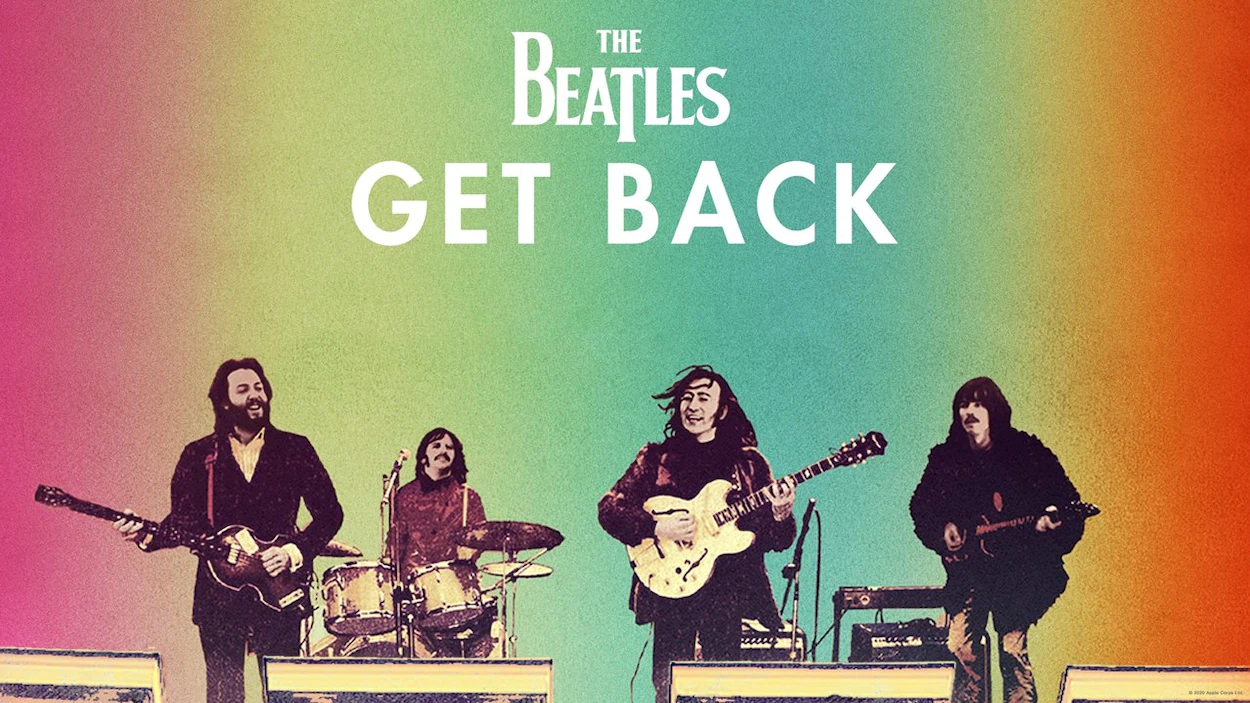
Right before the 2021 holidays, director Peter Jackon bestowed upon us all (as long as we were Disney+ subscribers) one hell of a Christmas gift: the 8-hour-long Beatles documentary Get Back, which chronicles the meandering creation of the last songs the Fab Four would ever record together.
The adventure began a long time ago, and would unfurl personal ramifications I did not suspect at all.

In early 1969, director Michael Lindsay-Hogg joined Paul, John, George and Ringo on a film soundstage (before the band eventually relocated to a proper recording studio) to shoot and record the musicians as they worked. The crew accumulated 50 hours of film and over 150 hours of audio throughout the creation/rehearsal/jamming/bickering sessions meant to give birth to classic songs like Get Back, Across the Universe and Let It Be, as well as spawn a live TV concert, a film documentary, a musical journey aboard a cruise ship, a mythical show amidst Roman ruins in North Africa—you name it. 
In the end, the footage was turned into an 80-minute "feature" that, back in 1970, helped fuel the tale of strife and general hatred surrounding the final Beatles album.

Enter Peter Jackson, 50 years down the line.
His team of wizards spent years cleaning up the footage like you wouldn’t believe: watching this on a 4K screen, you feel like you’re right there in the studio with the boys. But as miraculous as their achievement was on the visual side of things, what they accomplished with sound defies the imagination. Using artificial intelligence and machine learning, the team taught computers to train themselves in recognizing a human voice, an electric guitar, a drum kit, ambient noise, and so on.

You see, one of the problems with the original material was that everything was an aural jumble, with conversations constantly drowned by one musician or another noodling on his instrument. What the Peter Jackson treatment made possible was to “demix” the audio and build a multi-track recording decades after the fact. Want to lower the volume of the drums—or mute them altogether? No problem. You’d like to hear exactly what John is playing under that loud crash of crockery? Here you go.

Armed with those magically restored findings of visual and audio archeology, Jackson then put together the shortest cut he could that featured everything he deemed essential in understanding the creative process of the Beatles, circa 1969. The result is a can’t-miss, once-in-a-lifetime happening.
Yes, the blasted thing lasts over eight hours, but I’d have stared at my TV screen for twice as long with excitement and fascination. It’s that good.

I’ll spare you any kind of insight or analysis: the web is overflowing with those. What I wanted to put in writing was my personal reaction to that exceptional document.

Of course I was thrilled to see the Beatles up close and personal. To hear Harrison express his desire to have more of his songs appear on Beatles albums (and the secretly taped Lennon/McCartney conversation about how George was right); to see how much Starr was the backbone of the band, always the first to show up in the morning, never missing a step, 100% devoted to the band; to witness the creation of Get Back, from nothing to an almost finished hit song in a scant few minutes; to blink in disbelief at just how good Billy Preston was at the piano, completely unfazed by the presence of his iconic hosts; to see that charming and disarming Lennon smile, like the guy was still 10 years old and dreaming of becoming a music legend. It was an exhilarating journey all the way through. What I wasn’t prepared for—at all—was listening to the Let it Be album after having watched the Jackson documentary.

And so, about a week after that momentous event, I grabbed the black album off the shelf and popped it into the player. (Yes, I still listen to physical music, which sounds way better than those crappy MP3 files.)

The first thing that struck me was the humor. Of course, I’d heard Lennon’s antics before and after a variety of songs on Let it Be countless times: each intrusion is part of the actual track when you play it. But this time around, I remembered “being there” when the joke happened, watching Lennon look straight at the camera and mutter something silly under his breath. Before, I’d always thought those quips had been thrown in to add some color after the fact, but I knew now they’d always been there, spontaneous utterances let loose during the recording and which they’d just decided to keep on the master.

One of those jokes struck me more than the others. Right before McCartney launches into Get Back, Lennon says, “Sweet Loretta Fart she thought she was a cleaner, but she was a frying pan.” (Whereas the actual lyrics are thus: “Sweet Loretta Martin thought she was a woman, but she was another man.”) It always sounded to me like a joke someone would make after hearing (indeed, playing) the same song over and over again. But to us, the audience—at least the first time you hear it—the track is brand new: you get a parody of the song before you’ve even had a chance to listen to it. And that feels very strange, almost like an editing mistake.
Well, that was back then, before the Jackson revelation. Now? It makes perfect sense. Lennon goes into his “Loretta Fart” joke precisely because he’s been playing the song over and over again in the studio, and we’ve seen that happen. Brilliant.

I started to get emotional when I heard the three tracks recorded on the roof of Apple Music on that cold January day (One After 909, Dig a Pony, and I’ve Got a Feeling). I remembered seeing the actual setup, with passersby in the street wondering what the hell was happening, neighbors stepping out on their own roofs for a peek at the action, and the ever-so-polite English cops banging at the door and asking if perhaps, by any chance, they could cut that racket out. I listened in amazement—feeling like I was hearing those songs for the first time in my life—thinking about the band playing in those silly fur coats, McCartney hurling his voice against the wind, Lennon’s fingers freezing on the strings, and always that smile of pure joy to just be doing what they were doing, against all odds (many of them of their own making).
How glorious is that Peter Jackson presentation of the rooftop performance, showing us multiple camera angles simultaneously? It’s an idea that nobody back then could have conceived of (except maybe Abel Gance with his avant-gardiste NapolĂ©on—but that’s a story for another day), and yet a risk-free proposition in an age when most people have at least one giant screen hanging somewhere in their homes.

The Long and Winding Road started to tug at my heartstrings with a little more insistence, and by the time Get Back rolled around, tears were flowing down my cheeks, into a graying beard I was still decades away from growing when I heard the album for the first time. I was crying. Because I was discovering something new in that old collection of tunes. Because I could better understand where they were coming from. Because it was the ultimate destination, the final resting place of a long journey, many hours of which I had been privy to.
But mainly, and I could feel this in my gut, because I was free.
I realized then what I’d always held back before: that each of my innumerable listens of Let it Be had taken place with guarded ears and veiled heart. Remember, we were always told that the final Beatles album had been created amidst animosity, with band members at best tolerating each other’s presence, and recording sessions held together with chicken wire and a hefty supply of duct tape. So how could I in good conscience let myself bask in the joy and love I imagined oozing from every track on that album? It was show business, smoke and mirrors. I felt I owed the Beatles some respect for their creative suffering, and thus unconsciously kept my enjoyment of their last opus locked up in my brain and away from vital organs, as a cerebral experience that I quite enjoy on the occasional Sunday afternoon, thank you very much.

But it was all a lie. What Peter Jackson showed us was the happiness and camaraderie and brotherhood plain as day, on vibrant display as far as the internet can reach. When Lennon closes the album with “I'd like to say thank you on behalf of the group and ourselves, and I hope we passed the audition,” it’s not a crack aimed at livening up a broody atmosphere, but rather a genuine expression of joy at the conclusion of their rooftop escapade. Not only are we all allowed to see that, but we also understand it, because we were along for the most significant moments of the ride.
And so I cried. Not an unstoppable torrent of tears; rather, a silent trickle of deliverance and gratitude.

What I myself "got back" from all of this is the right to listen to Let it Be, the last hurrah of a band near and dear to my heart, without feeling an ounce of guilt for enjoying the songs so much. How can I ever thank Peter Jackson enough for this?
If I ever cross paths with the man, I’m liable to kiss him on the mouth.


# # #


Monday, November 7, 2016

And Now, For My Next Trick


I’ve been performing magic longer than I’ve been dating or driving. I am not alone: even in the mid-‘80s, when magic was far from the relatively mainstream “thing” it has since become, the arcane arts attracted their fair share of adepts. Back then, of course, one learned from books: teaching DVDs were but a dream, and DropBox videos would lay dormant for two more decades.
Gatherings proved equally problematic in those pre-Internet times. Whereas nowadays each and every geek can reach dedicated online fora—no matter the subject matter—in olden days, magicians were only afforded two avenues. The first was a handful of select clubs (such as the fabled Magic Castle in California) where a personal invitation was the only thing that could get you in; not the most realistic prospect for a budding legerdemain. But option 2, despite its more accessible trappings, was no less intimidating.
I’m talking about the magic shop.

Entering one of those special lairs was a sort of test. The location of magic shops was not kept secret, nor was a password or special handshake required to gain access to the premises. But the minute you walked in, you knew you were being judged. Evaluated. Weighed. Were you the tourist, wandering in as you might any other strangely inviting shop? Or perhaps the casual performer, looking for a new self-working trick to have fun with friends and coworkers? Or maybe, just maybe, you were the serious student, questing for the next move to add to your arsenal, the missing tool from your box, the final feather in your cap. Whoever you happened to be, you were welcome in there, and the old wizard tending shop would see to your particular needs.

I’ve always loved those exotic places, but it took me a while to grasp the exact reason. Many other establishments sold items I was excited about. Why did magic shops hold me spellbound in that regard? It eventually dawned on me that these surroundings made me feel like a kid all over again. Everywhere I looked, amazement waited, barely contained. A new mystery to solve, a new world to explore, a new question to answer… And I know it’s precisely what keeps calling to me, after all those years.

Over the course of my magical studies, I’ve come across quite the array of spectators. I know all the types: the easy-going guy who just enjoys the show, the girl who won’t stop screaming in excitement, the broody kid who wants you to fail, the know-it-all who calls the shots in advance, the guy who feels insulted because he can’t comprehend what he’s seeing, the pleased grandfather who wears a smile as big as his hat, the grandmother with a hand to her chest who looks like she’s about to faint, the alpha male who fumes at seeing his girlfriend melt at your fingertips—it takes all kinds. But I have to say that the vast majority of spectators are on the magician’s side and genuinely want the experiment to succeed: they understand it’s a little collaborative lie we’re telling ourselves, and that it functions best when everyone is onboard.
Similarly, I’ve encountered a wild variety of magicians, from the smug performer who assumes an air of superiority at being the only one in the room with any knowledge of what’s really going on (or so he likes to think), to the shy illusionist who almost apologizes when something out of the ordinary happens (which it’s supposed to!). Again, I’m happy to report that most magicians are a friendly bunch whose only desire is to entertain in a mystifying way.

To my absolute delight, I have found myself performing in several different settings. In a darkened corner at a fundraiser for a friend’s theater project (where a passerby ripped the deck out of my hands, looked at one of the pasteboards and shuffled it back in with the others, before handing the whole mess back to me and daring me to find his card); on a bumpy cab ride en route to Heathrow airport (during which bad lighting conditions both helped and hindered everything I did); at a large wedding in San Francisco (a completely improvised affair at the request of the groom, and one which was met with such enthusiasm that it derailed the proceedings and earned me the eternal wrath of the wedding planner); as part of actual magic shows (it does happen!); in the middle of an open-air market in Tunisia (where I was dragged from one stall to the next—with live chickens flying and clucking out of the way—so that I could repeat my demonstration for a friend or a relative); in multitudes of friends and family gatherings; and so on.

Now there is no denying that I enjoy the art of magic as a whole, but close-up magic holds a special place in my heart—and my hands. To me, magic has always been about the connection with spectators, and there’s no better way to connect with them then a close-up performance. The impossible happens right under the onlookers’ noses, sometimes directly into their hands: they are part of the event in a very personal way. I have specialized in card manipulation, always with a completely ungaffed deck: no shenanigans, no secret thing added or taken away, no special cards. Pure manipulation and misdirection. Not because I look down on special apparatuses—many of which are incredibly clever and allow for mindboggling miracles—but because I like to use a borrowed deck of cards, or else give mine away after I’m done. People actually enjoy this: their cards have gone through “something special,” and/or they walk away with a magical souvenir most of them will cherish for years to come.

So what does all of this add up to? The simple fact, I guess, that people from all walks of life, in all sorts of situations, will usually react the same way when presented with an entertaining demonstration that they can’t possibly explain. Their brains will look for a solution in column A, then in column B, maybe in column C (where all the clutter accumulates), and realize there’s none to be found. What they’re witnessing can’t be filed anywhere. And at that moment, that truly magical instant, their mouths will part in a toddler’s grin and their eyes will light up like those of an infant witnessing the world for the first time. Something ethereal will emanate from their features, something profound and beautiful. It’s there for just a second, but it (almost) never fails to show up. No matter where you are in the world, no matter whom you’re performing for. It’s there.
And I am hopelessly addicted to that unique something, that primordial look in their eyes. Like a vampire on the prowl for human blood, I keep performing magic to stimulate that response, so that I may quench my special kind of thirst, if only for a little while.
(At the same time I feel a bit guilty because everyone is busy looking at me: I’m the only one who gets to look back at all of them and take in that luminous glory.)

Living legend Paul Harris often refers to magic as “the art of astonishment,” a phrase that sings in its exactness. People are not just puzzled: they are SO puzzled that they revert to a state when everything was still new and full of wonder.

So the next time you see a magician at work, sacrifice your own enjoyment for a moment and look at the person next to you—especially towards the end of a trick. That is where the true magic happens.


# # #

Wednesday, August 17, 2016

Of Ice and Men

So I’m a hockey fan.
Don’t laugh or shrug or roll your eyes—this is serious stuff. Let me explain.

What I am not, in this case at least, is a stats geek. I do enjoy the charms of statistics when they highlight an outlier, or underline the utter improbableness of a given event. Numbers tell their best stories when they have a few plot twists poking out of their average bag. But who scored how many goals in what number of minutes on ice? Not my cup of tea. And I rarely drink tea.
What I am not, also, is an admirer of a particular team, or someone who goes nuts about specific players. Which is not to say that I don’t have a favorite team: after all, I was born and raised in Montreal, where rooting for any team other than the Canadiens—if you happen to root for anyone at all—is grounds for banishment. I learned to walk both in the shadow of the Rocket and in the blinding glare of Guy Lafleur, lost in the endless space between numbers 9 and 10, listening to uncles argue ad nauseam about one of the myriad aspects of their obsession, and always thinking that when I grew to be their age—a terrifying prospect—logic dictated there would be an exceptional Habs player wearing the number 11. (I was right.) Now, while I would not dare deny there are some players whose work I especially enjoy to watch, I don’t feel attached to them the way most self-proclaimed hockey fans might.
No. What I love about hockey, what I savor with my eyes and ears and even my nose when I happen to stand where pucks are being passed and shot and stopped, is the game itself: a masterpiece of design and refinement. 
Let’s not delve into the rules themselves, as that endeavor alone would yield an entire book—as it already has, many times over. (All right, I will permit myself a curt mention of the blue line, which generates a multitude of delightful situations. The way such a simple concept manages to sire a whole universe of outcomes boggles the mind.) Rather, let us peek at the bare bones of what makes ice hockey the game it is today. For an outsider, armed with nothing more than a cursory knowledge of the various articles that regulate the game, hockey completely mystifies.

It is played on a frozen liquid: a country pond, a frosted street between two houses during winter, or even, as is the case in most professional contexts, an artificially refrigerated surface. Two groups, each six men strong, take to the playing area with steel blades attached to their shoes. Such contraptions allow them not only to better navigate the frozen terrain, but to reach speeds unimaginable in any other man-powered sport. For hockey is a game of speed—as any player above the age of 30 will painfully attest. 

Each player is required to handle the central component of the game—a frozen disc of vulcanized rubber (how I love that thermal antithesis)—with a long and slender stick, erstwhile made out of wood, but now a lighter carbon fiber instrument. (And with a much higher propensity for ill-timed, game-defining explosions.) Mind you, nothing prevents players from touching the puck with any part of their anatomy, and such an occurrence will rarely result in a punitive setback. But the stick, that strange appendage which, by all laws of nature, should be tripping up players left and right, especially considering that a dozen of those long branches are being waved around at any one time, between the legs of fast-moving men balanced on a sheet of ice!—that stick counterintuitively enables juggling feats that would remain otherwise impossible. Like a veritable magician’s wand. So much so that a player sans stick finds himself stripped of his powers and might as well head back to his team’s bench. Which he often does.

Hockey action is also completely enclosed, insofar as gravity does its job. Pucks will rise above the boards on occasion, but on the whole, stoppage occurs at a low frequency. I remember witnessing a whole catalogue of plays that went on for more than 10 uninterrupted minutes, whizzing from one side of the battlefield to the other. As a kid, I always marveled at the fact that, unlike other sports where the goal was to carry a much-coveted object into the opposing team’s scoring area, hockey didn’t grind to a halt just because someone missed a pass or shot wide of the net. The game’s limits weren’t abstracted through lines painted on the grass: they existed in the physical world.
They were frikkin’ walls.
On one hand, that enclosure evoked a certain sense of security, like an old friend holding you tight; there was something comfy about a Sunday night game of hockey. On the other hand, the same barrier created a concentration of speed, energy and, yes, sometimes violence, in that it would push the gladiators back into the arena, rather than letting them escape their fate, even for just a moment. 

Hockey doesn’t wait—for anything, or anyone.
The game moves so fast that even referees become a liability, oftentimes unable to glide out of the way of a speeding puck, or player, or both. Many a game has seen its ultimate conclusion altered by the mere presence of an official in the right/wrong place, at the right/wrong time… and that’s just the way the puck falls. No take backs, no apologies. Just play the game.
The sounds alone are enough to make you snap to attention. Steel blades biting into the ice during a boost of acceleration; the dry slap of the frozen puck as it lands on a teammate’s stick, almost like a twig broken clean in half; the cringe-inducing, hollow wham as a player becomes another’s airbag in a contested corner; and, of course, the volcanic eruption, the drown-the-howls-of-the-mother-giving-birth-in-the-next-room sonic blast that accompanies that little black disc finding its way behind the goaltender. Especially the one wearing the wrong color.

At the end of the day—for it is the time when such things fade out—the clock is reset and the scoreboard blanked out, ready for the next skirmish. Spectators file out and let the building go back to sleep, as if nothing at all had taken place there. Even the intricate lines etched into the ice by zigzagging blades—an electrogram retelling the complete history of the match—are erased by the smooth action of the Zamboni, leaving in its wake a glistening, anonymous surface. A blank page, awaiting the morrow’s ephemeral tale.

For all its meaninglessness, the game of hockey remains, to me, a fast-paced spectacle that never fails to mesmerize. It’s an experience that builds upon its own repetition, with the completely avowed intention of resetting itself when the season—and the season—ends.
Because ice melts when winter goes into hiding, right?

# # #

Monday, May 30, 2016

Groovy


Physical media for sound recordings have a long and distinguished history, from 1857's phonautograph (which could record sound as a squiggly line on a piece of paper, but not reproduce any of it), all the way to the utter disappearance of any and all physical manifestations of musical data. My personal favorite is the Danish telegraphone, a device hatched during the final moments of the 19th century, where stainless steel wire was used to magnetically record and play back sound.

Of course, my birth in 1973 meant that I was a bit too late to the party: wire recorders fell from grace a good decade before I showed up. However, thanks to a musically inclined stepfather, I had access to a reel-to-reel tape recorder through which I experimented with sound and music for months on end. I also got to enjoy the occasional 8-track road trip whenever an uncleor an older cousin—took me for a ride in their big, living-room-sized automobiles. But in the end, as Fate would have it, I mainly grew up with cassette tapes and vinyl records.

Cassettes represented the cheap, nigh indestructible bearers of music. They could fit in your back pocket (and even survive in the event of your sitting down without a preliminary extraction) get thrown across the room with little to no consequences for the precious music they harbored, and were the perfect loaning vehicle. (How many of those little musical ships have you sent out into the world, confident that they would return at the end of a long voyage across the musical seas? Yeah, me too.) Cassettes could also be used to record, enablingamong other cultural phenomenathe ascent of the quintessential gesture of love or undying friendship, and the ultimate proclamation of the Self: the mixtape. And, perhaps above all, cassettes were also portable, making possible the hitherto unattainable dream of carrying your musical identity with you. Whether it be through the self-affirming boombox or the more respectful Walkman, music would nevermore leave your sideas long as the batteries didn't die on you.

By comparison, vinyls were older, bulkier, and somewhat more deserving of our care. In their own way, they commanded respect. Asking those arcane discs to work their sonic magic required a specific procedure, almost a ritual. With cassettes, you just popped the deck open, slammed down the next bundle of songs and hit play. Not so with a record. The artifact needed removal from two sleeves—one cardboard, the other paper (or plastic)and a gentle cradling all the way to the turntable, where it would rest comfortably on a circular altar. Then the scepter would be brought forth, lowered to the spinning crown of the king, and the initial pops and crackles would signify that we were about to be granted an audience.
Records were more fragile and overall less practical than their caged, magnetic counterparts. And yet people developed a particular attachment to them, perhaps precisely because they looked and felt much less disposable than cassettes. DJs were an exception, but then again DJs were godsand gods were allowed, indeed expected, to manhandle kings in order to fill the world with wonders. To the rest of us, records were something we needed to nurture, for the simple reason that they would not last forever.

And that is what I miss from time to time when I'm using modern contraptions to reproduce sounds from around the world and across time. The destructibility of music. The knowledge that each time I listened to a particular piece of music, my action would leave a mark. The magnetic patterns would fall apart a bit more, or the groove would erode and lose a little of its sharpness. I loved the mystical feeling that the more the music engrained itself into my brain (and soul), the more it disappeared from its physical medium. It was an alchemical process, a wondrous transference through which notes and harmonies and rhythms were bestowed upon me at the quantifiable rate of 33 or 45 rpm.
The first law of thermodynamics expressed in drum fills and power chords.

Digital music comes with its own set of endearing qualities, one of which is its ubiquity. That stuff is beyond portable: wherever you go, your music is already there, waiting for you. There's a sense of exhilaration to this, a feeling that my MP3 of FLAC file is running through that great player in the sky, connecting me to every other music enthusiast in a planet-wide celebration. Something very much alive, throbbing.

So I enjoy and profoundly benefit from music's unstoppable march towards the future. But all those newfangled gizmos belong to Eternity, while I learned to understand and love music through a technology in which I could recognize myself: a physical medium destined to decline through use and ultimately vanish.
Maybe that's why I decided to have children, so that I could pass on that passion before my groove finally gave out and my very last magnetic particles went back to the stars.

[The archival life of magnetic tape is generally expected to be 30 years; I am happy to report that I have exceeded that estimate.]

# # #